


Walk into your home and you should feel relief—not get jumped by last night’s garlic, wet-dog couch funk, or that stubborn smoke haze that clings like it pays rent. Real odor elimination isn’t about drowning the air in perfume. It’s about going after the source so the smell stops coming back for a rematch. In this room-by-room guide, I’ll show you how to build a simple, repeatable system using The Modest Co.’s odor-fighting lineup—like the Odor Killa Spray - Arctic Breeze and the Odor Killing Candle - Indica Girl—to keep every space smelling intentionally fresh.
Why odors stick around (and why “freshener” fails)
Odors aren’t vibes. They’re chemistry—volatile molecules that hitch onto fabrics, carpet, and porous surfaces, then re-release when humidity rises or the room warms up. The reason many air fresheners disappoint is simple: they’re designed to overlay fragrance, not remove what’s already embedded.
Neuroscientist Dr. Rachel Herz (Brown University) explains how powerfully smell molecules interact with our sensory system—meaning the only reliable long-term strategy is to reduce the odorants themselves, not just distract your nose (Brown University: research and commentary on smell).
Two data points that matter here:
- The air freshener market (including odor-control products) continues to grow as consumers demand better performance—Grand View Research estimated the market at USD 11.04B in 2019 with continued growth projected (Grand View Research: Air Freshener Market).
- The EPA notes indoor air can be 2–5x more polluted than outdoor air under certain conditions—one reason smells build up faster than people expect (U.S. EPA: Indoor Air Quality).
The Modest Co. leans into a “don’t just cover it—confront it” approach with enzyme-based odor control designed to help neutralize stubborn household smells at the source (not a medical or sanitizing claim—just straight-up odor strategy). If you want the deeper nerdy version, read: The Science Behind Odor Neutralization: Why The Modest Co. Works When Others Don’t.
Living room odor control: the “soft-surface problem” (couches, rugs, throws)
The living room is where life happens—meaning it’s also where odors take hostages. Pet oils bind to upholstery, smoke settles into textiles, and “clean” can still smell… not clean. If your couch is the main offender, start here: How Pet Oils Bond to Sofas.
My go-to living room routine (fast + repeatable)
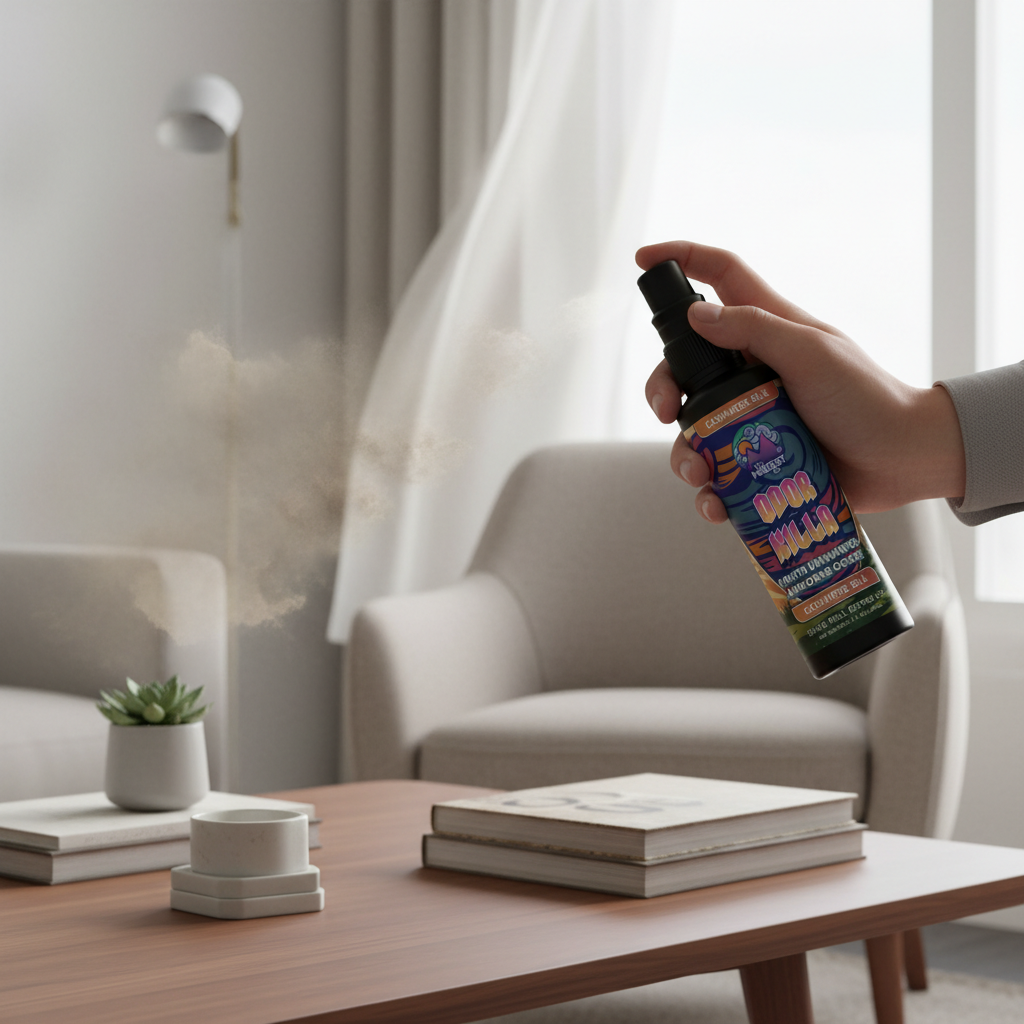
- Hit fabrics first: lightly mist upholstery and rugs with Odor Killa Spray - Cashmere Silk (test a small hidden spot first—always).
- Then run ambient control: burn Odor Killing Candle - Big Foot to keep the room from “re-blooming” with odor as the night warms up.
- Vent for 10 minutes: crack a window, run a fan—give the air a clean exit route.
Mini case study: odor control and guest satisfaction
High-traffic homes (like short-term rentals) are basically odor stress tests. Airbnb’s hosting guidance emphasizes practical steps to keep spaces smelling fresh for guests—especially textiles, trash routines, and ventilation (Airbnb Hosting Resources: keeping your listing smelling fresh). The takeaway for homeowners: treat odor like a system (source + soft surfaces + airflow), not a one-spray miracle.
Kitchen odor elimination: cooking smells, trash air, and “mystery funk”
Kitchens produce aggressive odor molecules—especially from cooking oils, spices, garbage, and damp dish zones. Add humidity and you’ve basically created an odor incubator. If you’ve ever noticed pet + kitchen smells “merge” into something worse, you’re not imagining it. For the humidity connection, read: Pet Odors and Humidity: The Hidden Link.
Kitchen playbook
- After cooking: mist the air lightly and aim near (not directly onto) soft surfaces like curtains with Odor Killa Spray - Lavender Dreams.
- Trash zone: spray around the exterior of the bin and nearby floor area (avoid food-contact surfaces).
- Ongoing freshness: burn Odor Killing Candle - Looped when the kitchen needs a steady reset (especially after frying or fish).
Design trends back up how much people care: the National Kitchen & Bath Association publishes ongoing research and insights showing homeowners prioritize comfort factors—including smell and ventilation—in kitchen planning (NKBA Research).
Bedroom freshness: where “clean laundry” still isn’t enough
Bedrooms trap odor in bedding, carpets, and upholstered headboards. If you have pets on the bed (no judgment—same), you’re dealing with oils + dander + warmth, which can make smells rebound at night.
If you’ve been vacuuming like a hero and still losing the war, here’s why: Why Vacuuming Alone Doesn’t Remove Pet Smells.
Bedroom routine (low effort, high payoff)
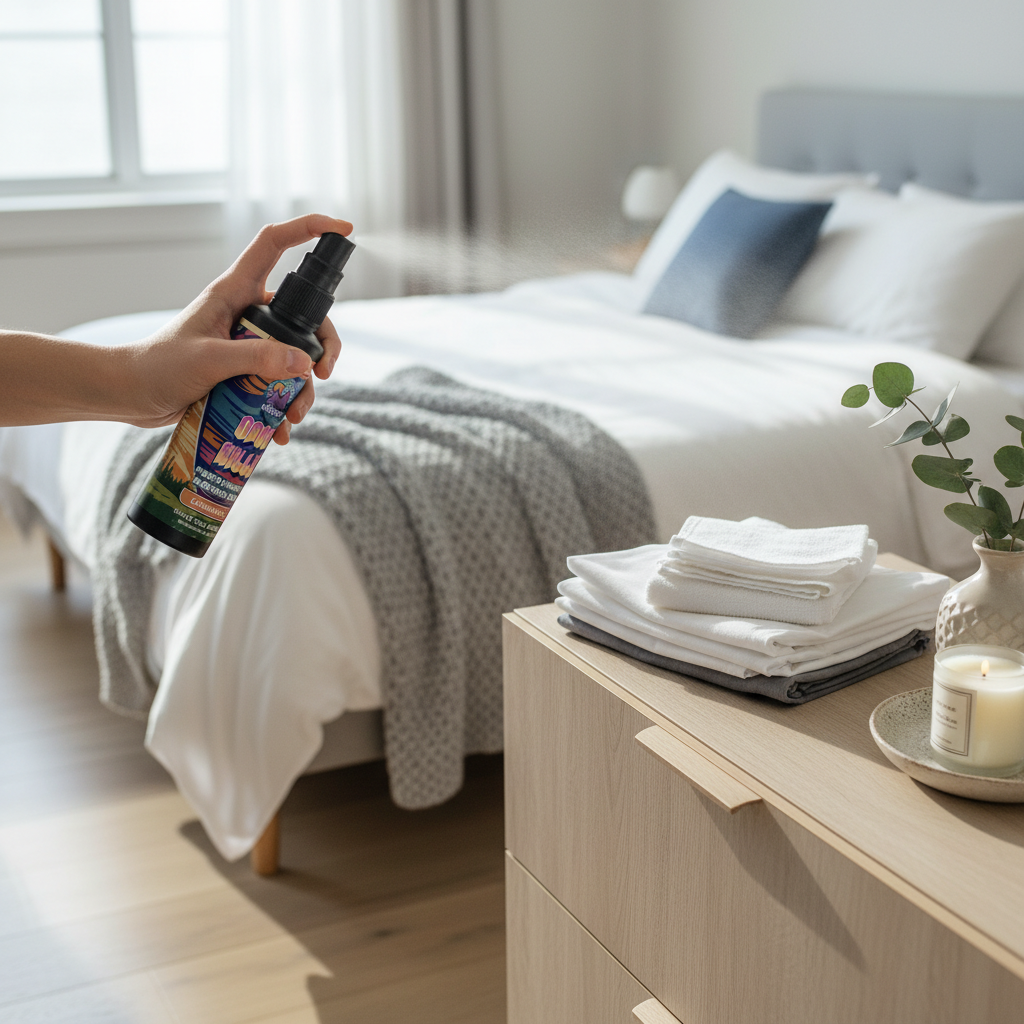
- Pre-sleep reset: a light mist of Odor Killa Spray - Arctic Breeze in the room (not directly on pillows/face-contact areas).
- Smoke odor eliminator support: if smoke is part of your reality, use an odor-eliminating candle like Odor Killing Candle - Sativa Diva earlier in the evening (always follow candle safety and allow the room to air out before sleep).
“Odor control works best when you treat smells as chemistry—identify the source, reduce the compounds, and prevent re-release from fabrics.”
— Dr. Camille Soto, PhD (Chemistry)
Bathroom odor control: humidity, damp textiles, and fast turnarounds
Bathrooms are humid by design, which means odors can linger longer—especially in towels, bath mats, and any soft surface near the shower. Your goal here is consistency: small interventions, done often.
Bathroom quick wins
- After showers: run the fan and crack the door to reduce moisture (less moisture = fewer odor molecules hanging around).
- Textile reset: lightly mist bath mats/towel storage area with Odor Killa Spray - Obsidian Sky (again: patch test fabrics first).
- Ambient support: rotate in The Modest Co. odor killing candle when the room needs a deeper refresh.
Whole-home odor mastery: the system that keeps smells from coming back
If you want your home to stay fresh—without constantly chasing odors—think in layers:
- Remove the source (cleaning, laundry, trash routines).
- Treat soft surfaces (sprays where odors cling).
- Control the air (ventilation + candles for steady coverage).
For a room-by-room expansion (including smoke, pets, and everyday living odors), bookmark: Room-by-Room Odor Control: Eliminating Smoke, Pet Smells, and Everyday Living Odors. And if you care about sustainability, here’s the practical version (no fluff): Eco-Friendly Odor Control That Actually Works.
Shop The Modest Co. odor-eliminating arsenal
- For a crisp, clean reset: Odor Killa Spray - Arctic Breeze
- For smooth, luxe softness on fabrics: Odor Killa Spray - Cashmere Silk
- For dark, fresh “mysterious but clean” energy: Odor Killa Spray - Obsidian Sky
- For a candle that means business: Odor Killing Candle - Big Foot
- For sweet, playful freshness: Odor Killing Candle - Looped
- For a signature vibe (and a fan favorite): Odor Killing Candle - Indica Girl
Conclusion: make your home smell like you’ve got your life together
Odor elimination is a skill—and once you treat it like a system (source + fabrics + air), your home stops betraying you the second someone walks in the door. If you’re ready to upgrade from “cover it up” to confident, consistent freshness, explore the full lineup at modestandco.com.
FAQ
What’s the difference between masking odors and eliminating them?
Masking adds fragrance to distract your nose temporarily. Odor elimination targets the compounds causing the smell so it’s less likely to rebound—especially from soft surfaces like upholstery, rugs, and bedding.
Are The Modest Co. products safe to use around pets?
When used as directed, The Modest Co. odor-control products are designed for everyday homes—including pet homes. For best practice, allow sprayed areas to dry and keep pets away from freshly treated surfaces until fully dry.
How long should I burn an odor killing candle?
A common best practice is 2–4 hours per burn so you get an even melt pool and consistent performance. Always follow standard candle safety guidelines and never leave a candle unattended.
Can these help with strong smoke odors?
They can help reduce stubborn smoke smells by targeting odor compounds and refreshing the room. For best results, pair odor control with source cleanup (ashtrays, fabrics, ventilation) so the smell doesn’t reattach to soft surfaces.
About the Author
Dr. Camille Soto is a home-fragrance and odor-science writer with a PhD in Chemistry and 15+ years spent translating “molecular-level” concepts into real-life routines that actually work in busy homes. She writes for The Modest Co. with one mission: help you stop masking odors and start running your space like the fresh-air fortress it deserves to be.