


You know that moment when you walk into your place and the vibe is almost perfect… except the air is telling on you? Pet funk trapped in upholstery. Smoke that clings to curtains like it pays rent. “Clean” rooms that still smell vaguely like yesterday. The fix isn’t louder fragrance—it’s smarter odor elimination. That’s where enzyme sprays come in: precision tools that go after the source, not just the symptoms.
What Are Enzyme Sprays (and why do they matter for odor elimination)?
Enzyme sprays are odor-fighting formulas that use enzymes—proteins that speed up chemical reactions—to help break down the organic gunk that feeds lingering smells. Think of them like tiny, highly trained cleanup crews: they don’t just perfume the room, they go looking for the mess that’s creating the odor.
That’s why enzyme sprays are a go-to category for anyone searching for a pet odor remover, a smoke odor eliminator, or the best odor eliminator for fabric-heavy spaces. If you want the deeper nerdy breakdown, I wrote this companion piece: How Do Enzymatic Odor Eliminators Work at the Molecular Level?
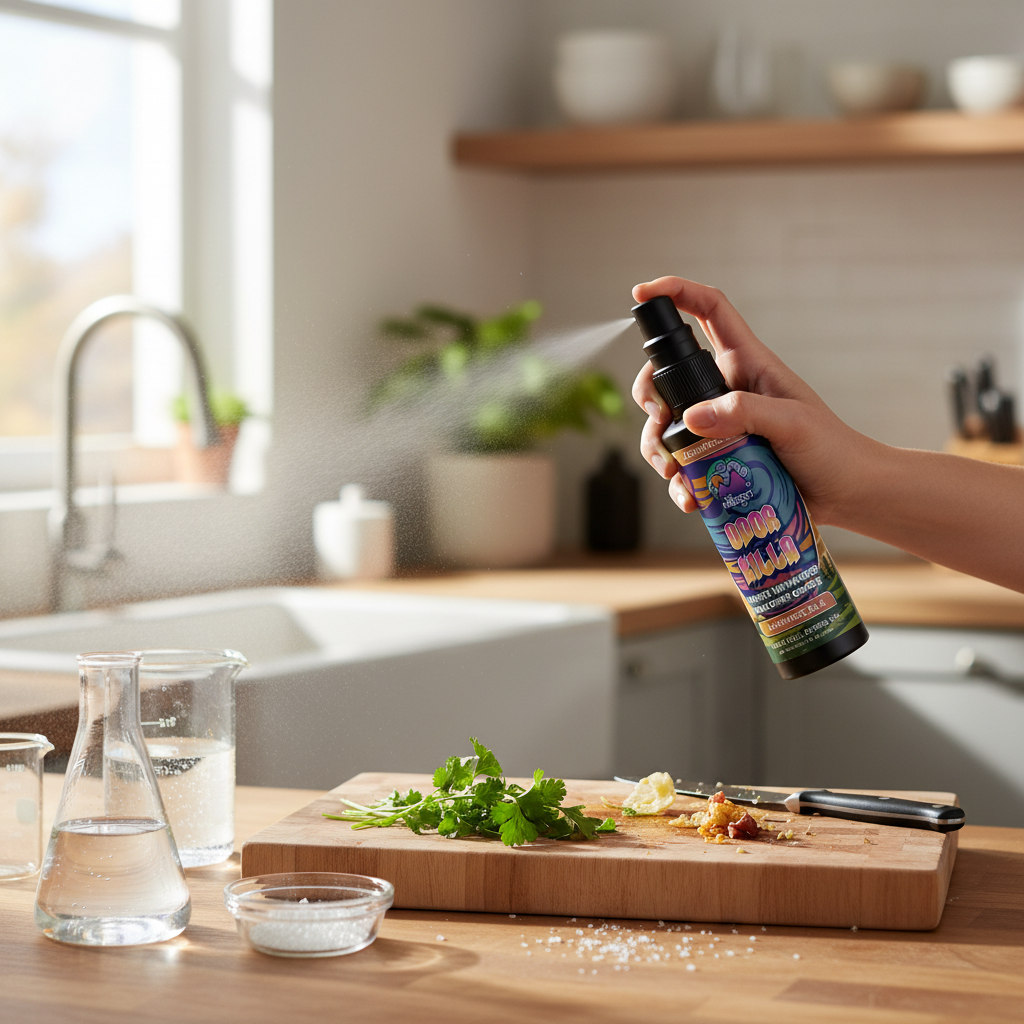
The science: how enzymes help neutralize stubborn smells
Odors often stick around because the source sticks around—microscopic residue in fibers, porous surfaces, and the little “odor hotels” hiding in rugs, cushions, and car seats. Enzymes can help break down certain types of organic residue (like proteins and fats) into smaller compounds, which can reduce the intensity and persistence of odor.
Stats that matter (with clickable sources)
- Research into bio-based and enzyme-adjacent cleaning approaches continues to expand as consumers demand effective, lower-harshness solutions—part of why the broader bio-enzymes market is projected to grow significantly. Source: Grand View Research – Bio Enzymes Market.
- Independent research frequently evaluates how formulations can reduce odor-linked compounds (including VOC-related contributors) under different conditions. Example source: Environmental Science & Technology (ACS) – peer-reviewed research.
- Consumer preference is also shifting toward sustainability-minded products, which is one reason “bio-based” and “enzyme” cleaning categories keep gaining attention. Source: NielsenIQ / Nielsen – Sustainability insights.
“Enzymes are nature’s precision tools—highly specific catalysts that can target particular residues without relying on harsh chemistry.”
— Expert perspective commonly echoed in enzyme and biocatalysis literature; see overview: Enzyme basics (Encyclopaedia Britannica)
Practical translation: if your odor problem is coming from residue in fabric (pet oils, smoke film, spilled food, damp must), an enzyme spray is often the most logical tool in the arsenal. For Modest & Co. fans, that “arsenal” includes scents that don’t feel like a chemical cover-up.
Why Modest & Co. Odor Killa Sprays are built for real life
A lot of products promise “fresh.” Modest & Co. goes for fresh + fearless—odor elimination energy with a luxury-fragrance finish. If you’re choosing a daily driver, start here:
- Odor Killa Spray - Arctic Breeze — crisp, clean, “open-the-windows” energy without actually opening the windows.
- Odor Killa Spray - Obsidian Sky — deeper, moodier, perfect for living rooms and nighttime resets.
- Odor Killa Spray - Lavender Dreams — soft, calming vibe for bedrooms, linens, and post-pet-walk refreshes.
- Odor Killa Spray - Cashmere Silk — smooth, elevated, “my home is expensive” energy.
Want to understand why “clean” homes still smell? Pair this article with: Why “Clean” Homes Can Still Smell Like Pets.
How to use an enzyme spray (so it actually works)
The biggest mistake I see: people mist the air and expect miracles. If the odor lives in fabric, you have to treat the fabric.
- Find the source zone. Rugs, couch arms, pet beds, curtains, car seats—go where odor clings.
- Test a discreet spot on delicate fabrics first (especially vintage textiles).
- Spray the surface lightly and evenly (don’t soak unless the material can handle it).
- Let it sit and dry. Enzymes need contact time; rushing the dry-down can reduce effectiveness.
- Repeat for “deep-set” odor. Old residue often takes more than one pass.
If your issue is pet funk that keeps resurrecting, don’t miss: Why Pet Odors Come Back After Cleaning and How Pet Oils Bond to Sofas.
Case study: a “multi-pet + upholstered everything” apartment reset
Here’s a real-world scenario I see constantly: a small apartment, two pets, one favorite couch, and that one rug that has absorbed every rainy walk. The owner had tried candles and plug-ins, but the odor kept coming back—because the source (oils + trapped residue) was still in the fibers.
Protocol used (7 days): spot-treat the rug and couch arms 3x during the first week with an enzyme spray, vacuum between treatments, and maintain the room vibe with a candle burn schedule. They chose Odor Killa Spray - Obsidian Sky for soft furnishings, and rotated in Odor Killing Candle - Big Foot for that steady “fresh but not fruity” baseline.
Outcome: noticeable reduction in “warm fabric smell” by day 2, and by the end of the week the apartment stopped re-odorizing after heat cycles (sunlight on the rug, HVAC running). The key wasn’t drowning the space in scent—it was treating the source and then layering fragrance intentionally.
If you want a brand-published example of enzyme cleaning being used for pet mess odor control, see: Nature’s Miracle – Enzyme cleaners for dog urine (brand educational resource). (Note: results vary by surface, severity, and how long the odor has been bonding to fibers.)
Enzyme spray vs. traditional air fresheners: what’s the real difference?
Traditional air fresheners often focus on odor coverage. Some products use odor-trapping technologies (like cyclodextrins), which can help—but if the source is still embedded in fabric, the smell can rebound. Enzyme sprays are popular because they’re designed to address residue, not just air.
Translation: if you’re dealing with smoke on curtains or pet oils in upholstery, you want a process, not perfume. If smoke is your main battle, pair this with: Can Modest Sprays Help With Cigarette Odors Too?.
Build a “smell-proof” routine: spray + candle layering
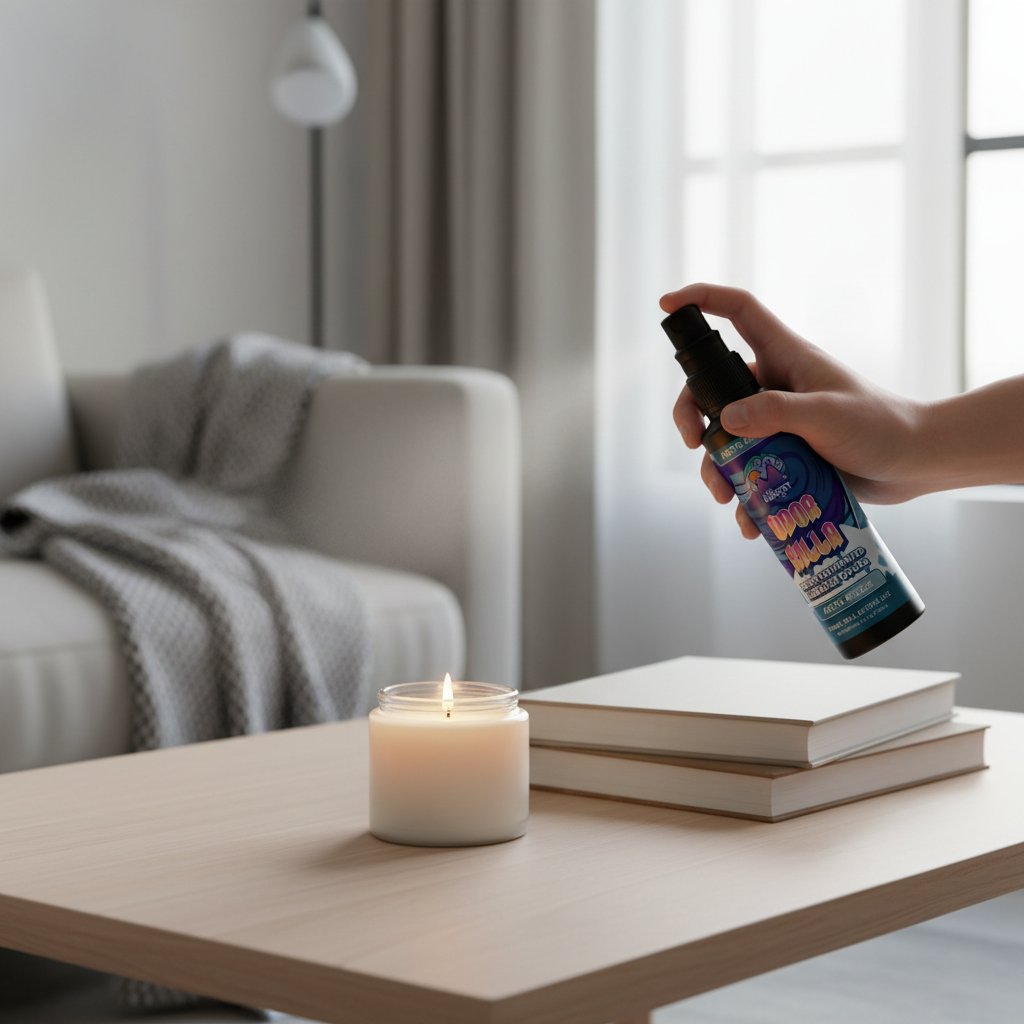
My favorite setup is “strike team + ambience.” Use sprays where the odor lives, then use a candle to keep the room’s signature scent consistent.
- For a brighter vibe: Odor Killing Candle - Sativa Diva
- For cozy sweetness: Odor Killing Candle - Fluffy Loops
- For a smooth, elevated baseline: Odor Killing Candle - Indica Girl
Want to get fancy with it? Read: Scent Layering: The New Language of Home Décor.
FAQ: Enzyme sprays, odor elimination, and using Modest & Co. like a pro
What makes enzyme sprays better than regular air fresheners?
Air fresheners mainly add fragrance (and sometimes trap odor in the air). Enzyme sprays are designed to help break down odor-causing residue on surfaces, which can reduce “odor rebound” over time.
Can I use an enzyme spray on couches, rugs, and bedding?
Usually yes, especially on common upholstery and carpet fibers—but always spot-test first. For deep odors, apply lightly, let it dry fully, and repeat rather than oversaturating.
What’s the best Modest & Co. spray for pet odors?
Start with a scent profile you’ll love using consistently. Many pet owners rotate between Odor Killa Spray - Lavender Dreams for bedrooms/linens and Odor Killa Spray - Obsidian Sky for living spaces and upholstery.
How do I combine enzyme sprays with an odor killing candle for maximum effect?
Use the spray where the odor lives (fabric, carpet, car seats), then burn a candle to maintain a consistent room scent. For example, spot-treat with Odor Killa Spray - Cashmere Silk and maintain ambience with Odor Killing Candle - Indica Girl.
Conclusion: stop masking—start eliminating
If you’re done playing fragrance whack-a-mole, enzyme sprays are your upgrade. Treat the source, reduce the rebound, and then layer scent like you actually mean it. When you’re ready to build your odor-killing lineup, start with Odor Killa Spray - Cashmere Silk and explore the full collection at Modest & Co..
About the Author
Dr. Camille Soto is a biochemist focused on practical, home-safe odor control strategies and the everyday chemistry of “why it still smells.” She translates enzyme science into real routines for real homes—pets, smoke, upholstery, and all.